A Paris landmark
The Eiffel Tower, your way
You catch sight of the Eiffel Tower between buildings, then lose it again around a corner. That moment can be as memorable as standing underneath it. Decide what you want from this encounter: the height, the engineering, a photograph with room to breathe, or simply the pleasure of seeing Paris recognise itself.
Open official visitor information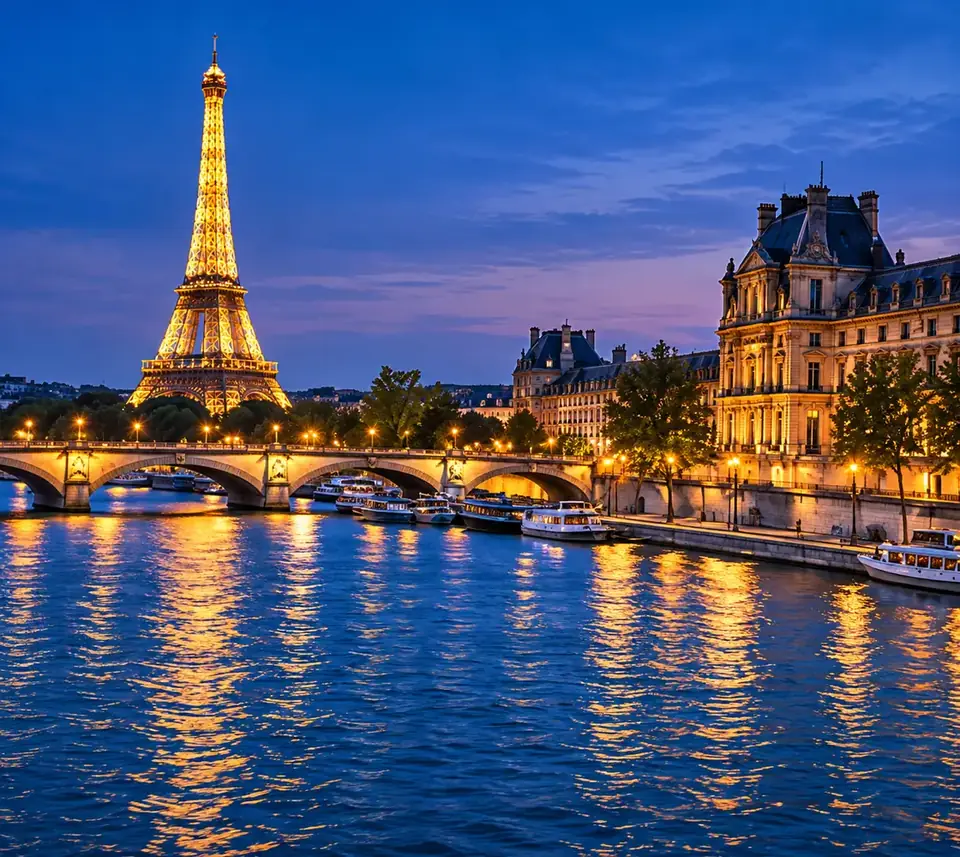
A silhouette or a place to enter?
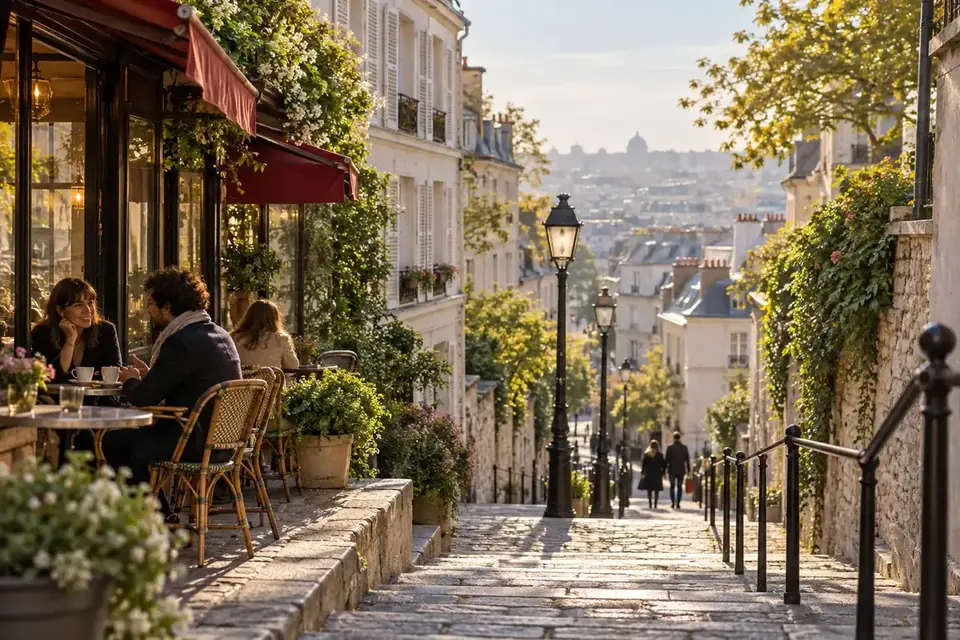
The tower offers two quite different pleasures: recognising a shape you already know, and entering a structure whose scale changes as you approach. Decide which matters most before treating an ascent as compulsory. From across the river you can read the whole outline; beneath the arches you lose that familiar image and discover girders, connections and extraordinary empty space. If your favourite part of Montmartre is its broad view across the rooftops, you may enjoy comparing those two ways of seeing Paris.
Read the iron before the skyline
Look at how the four legs spread towards the ground, then gather into a narrower form. From underneath, the open lattice lets sky remain part of the monument rather than enclosing you behind stone. Follow one diagonal with your eyes and notice the repeated smaller pieces that make the apparent simplicity possible. You can enjoy this without knowing engineering vocabulary. Ask which parts seem delicate from a distance and substantial nearby; the answer changes the tower from a symbol into something people had to design and assemble. The first floor adds a glass floor, which makes the structure beneath your feet part of the encounter, as well as interpretation of the tower’s history. Choose it for that close relationship with the building, rather than seeing every level only as a step towards the summit.
What the second floor changes
The official ascent choices distinguish the second floor from the summit, and this is an experience decision as well as a ticket decision. At a lower viewing level, individual buildings and the river’s curves remain easier to read as parts of a lived city. Think about whether you want to identify places or feel the abstraction of distance. Someone uneasy with exposure may value an agreed stopping point more than the highest possible viewpoint. Discuss that preference before the group’s enthusiasm becomes a promise nobody wants to question.
When height is the main attraction
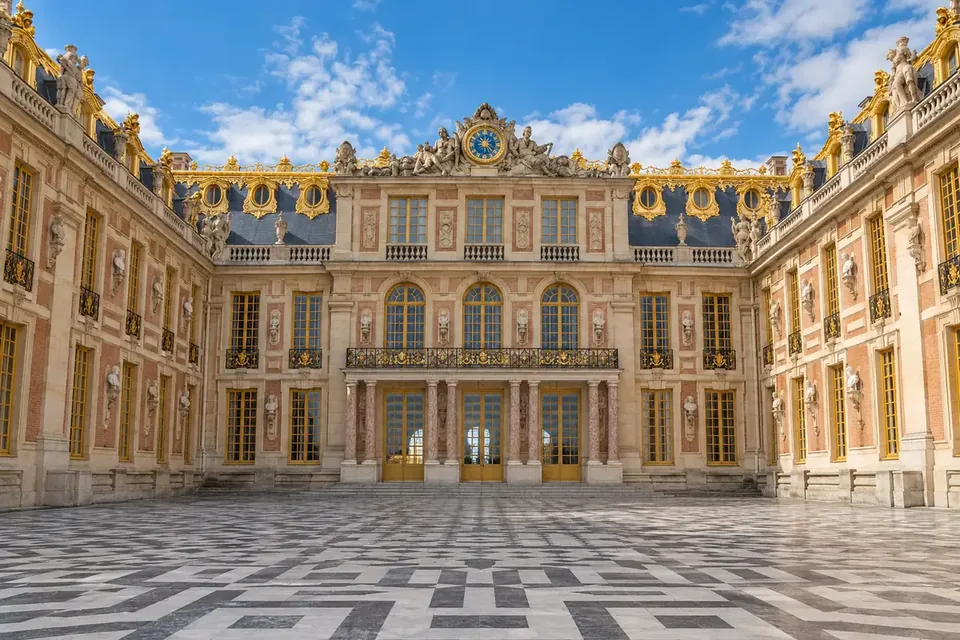
The summit viewing level, 276 metres above the ground, offers an enclosed level and an open-air level. It also includes a reconstruction of Gustave Eiffel’s office and a 1:50 model showing the summit as it appeared in 1889. These details bring the human scale of the project back into a panorama. Greater height does not automatically make every city detail clearer; choose it because reaching the top matters to you, subject to current access. If you chiefly seek grandeur arranged at ground level, the palace and perspectives of Versailles offer another expression of ambition.
Choose a foreground for your photograph
Trocadéro gives the tower a full-length presence across the Seine; the Champ-de-Mars provides a long green setting. Along the river, trees, parapets and boats can interrupt the outline in useful ways. Instead of moving until everyone else disappears from the frame, decide what the foreground contributes. A figure gives scale; a branch makes the structure feel embedded in the city. Keep shared paths clear and enjoy the view before checking the image. The photograph should remind you of a place you actually paused to notice.
Let the gardens restore human scale
Around the base, planting and paths change the relationship between the monumental and the everyday. Notice how quickly a leaf, a bench or another visitor’s movement brings your attention back from the skyline. This contrast is part of the tower’s interest. It also helps you decide whether you want another architectural encounter afterwards or a different kind of looking. Sculpture in the Rodin garden asks you to move around forms at a more intimate scale, with greenery doing a very different job around bronze.
Give the encounter a proper ending
After a height-focused visit, avoid judging the experience only by how many landmarks you identified. Compare what surprised you: the ironwork, the shape of the Seine, or how small familiar streets looked. A relaxed French meal chosen for its atmosphere can give the group room to talk rather than adding another observation deck. If you remain undecided about ascending, ask whether you would feel disappointed to leave having seen the tower beautifully from outside. That answer is more useful than someone else’s compulsory Paris checklist.
If one person wants to go up while another prefers the view from outside, agree on a meeting point and time apart first. Leave a flexible riverside break afterwards rather than another timed visit. Prepare the metro and RER connections back to your accommodation separately.
Prepare your visit
- Check the official tower website for available levels, tickets and access requirements.
- Choose your preferred viewpoint before adding other activities.
- Use the transport guide for route details and current connections.
Where will this discovery take you next?
Sources and updates
Confirm tickets, visit calendars and access conditions directly with the official source.
A publication affiliated with VIP Paris Transfer.
Editorial principlesHave you chosen where to go?
Explore metro, RER and travel options in our separate transport guide.
Open the transport guide