An escape with a point of view
Versailles: choose your palace experience
Versailles can be dazzling, but its size is also a decision. You might be drawn to the palace’s theatrical rooms, the geometry of the gardens or the more varied landscapes of the wider estate. Choose the part that makes you curious before treating the whole place as a single attraction you must completely cover.
Open official visitor information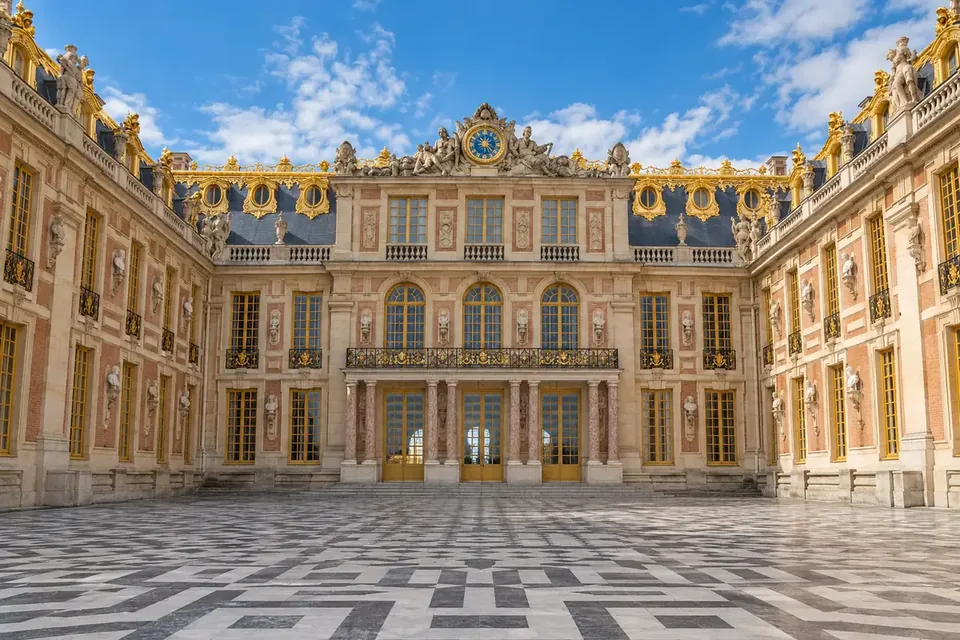
Choose what grandeur means to you
Versailles is a palace, a designed landscape and an estate with several distinct architectural moods. Begin by deciding which of those makes you curious. If you love the performance of interiors, the palace deserves sustained attention. If long perspectives and outdoor space are the attraction, let the gardens lead the decision. The former royal rooms at the Louvre offer another meeting of palace and art, but Versailles makes the organisation of power through space especially explicit. The visit becomes more rewarding when splendour is a question to investigate rather than a quantity to accumulate.
Read the Hall of Mirrors across the room
The Hall of Mirrors is 73 metres long, with 357 mirrors set into 17 arches opposite the windows. Those numbers explain an arrangement you can observe: light, reflection and the garden view answer each other across the gallery. Rather than photographing only the length, turn sideways and follow that exchange. The room replaced an open terrace, changing the relation between palace and outdoors. Its decoration celebrates France’s political, economic and artistic achievements under Louis XIV, making the surface a statement about the kingdom as well as an extraordinary visual effect.
Let one room carry more than one history
The Treaty of Versailles was signed in the Hall of Mirrors on 28 June 1919, adding a later political layer to a space designed for royal display. That coexistence is worth holding in mind without letting either event explain everything you see. Ask how a room can acquire new meaning while its decorative language remains. If this relationship between objects and political history appeals to you, Carnavalet approaches the French Revolution and Napoleon through material evidence. At Versailles, the architecture itself becomes part of the evidence, framing both ceremony and subsequent remembrance.
Follow the garden’s control of your gaze
In the gardens, look at how an opening, path or distant feature directs attention. A long view can seem effortless until you notice the repeated decisions required to sustain it. Then look sideways, where smaller spaces interrupt the grand axis. This tension between order and discovery makes the landscape more than a green backdrop to the palace. Compare it with Monet’s garden at Giverny, where cultivated abundance and reflections support a different visual ambition. Both are made landscapes, but they ask your eyes to move and settle in markedly different ways.
Consider the Trianon estate on its own terms
The Trianon estate includes the Grand Trianon, Petit Trianon, Queen’s Hamlet and ornamental gardens. Adding them requires genuine interest and the energy for a wider encounter, not just a desire to complete a map. Jules Hardouin-Mansart built the Grand Trianon in 1687 on the site of the earlier Porcelain Trianon. Use that separate identity as a reason to look at the architecture afresh. The contrast with the main palace is part of the attraction, but it will be harder to appreciate if the extension is treated as a final obligation after attention has already disappeared.
Read rustic appearance as a choice
The Queen’s Hamlet’s rustic-looking buildings drew inspiration from picturesque designs by Hubert Robert. Look at how an apparently simpler setting remains carefully composed. This is a useful place to ask whether informality can also be a form of display. Resist reducing the site to a single anecdote or treating its appearance as ordinary village life preserved without mediation. For a more intimate relationship between art and a historic domestic setting, Rodin’s Hôtel Biron and sculpture garden offer another comparison: the pleasure there also comes from different scales of architecture and cultivated surroundings sharing one visit.
Make ambition compatible with comfort
Choose one main interest and one possible addition, then verify the current admission scope and access for those areas. Garden events and estate spaces can have distinct conditions, so the place name alone does not establish what is included. Discuss weather, walking and seating needs before the group commits to its largest version of the visit. If you chiefly want a commanding view of Paris itself, the Eiffel Tower offers a different encounter with monumental ambition. Versailles earns its time when you want to read the estate’s arrangements closely, leaving room to question the power and pleasures its grand surfaces present.
Two visitors may give different weight to palace rooms and gardens. Choose what to see together first, then leave flexible time for individual interests. Before adding another major visit on returning to Paris, consider the walking already done. Family and luggage preparation is particularly useful when changing accommodation that day.
Prepare your visit
- Verify official ticket scope, reservations and estate access.
- Check garden events, weather and accessibility conditions.
- Use the dedicated guide and relevant transfer page for travel arrangements.
Where will this discovery take you next?
Sources and updates
Confirm tickets, visit calendars and access conditions directly with the official source.
A publication affiliated with VIP Paris Transfer.
Editorial principlesHave you chosen where to go?
Explore metro, RER and travel options in our separate transport guide.
Open the transport guide